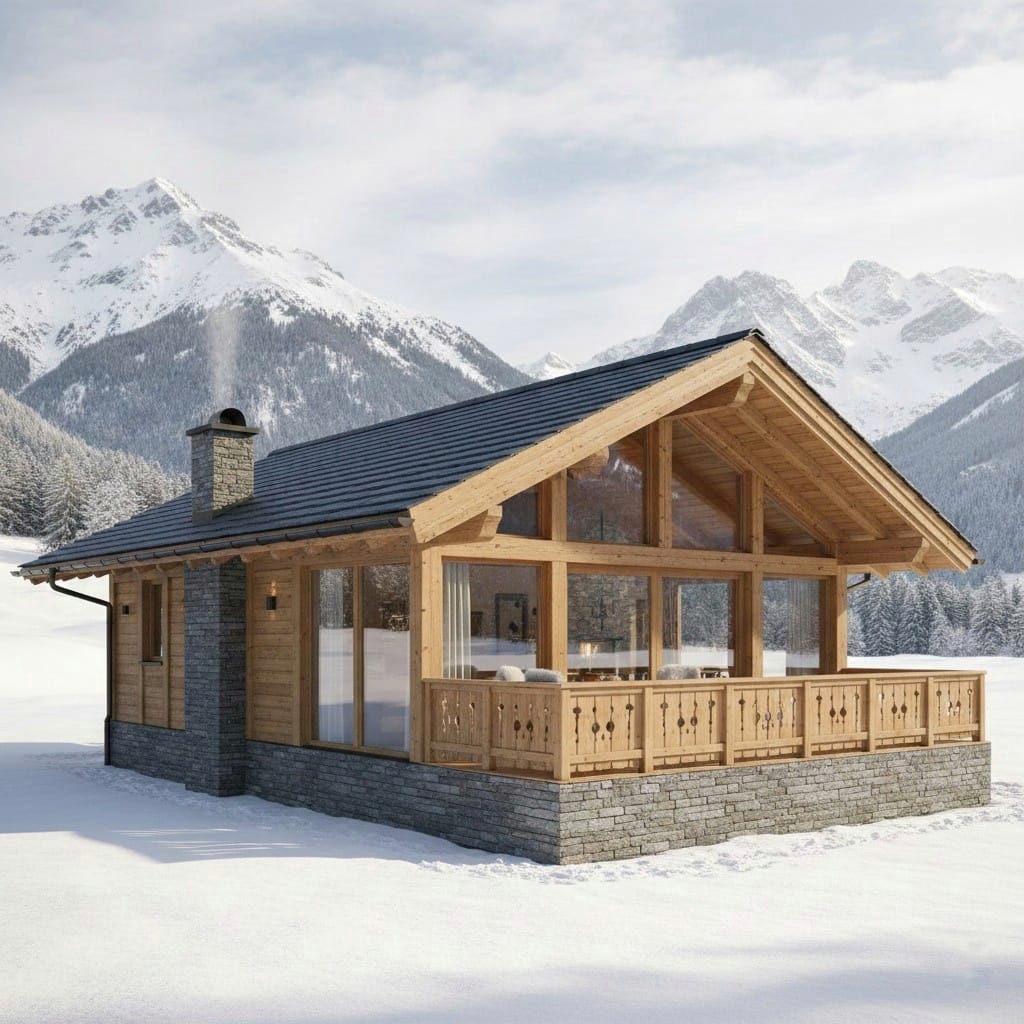
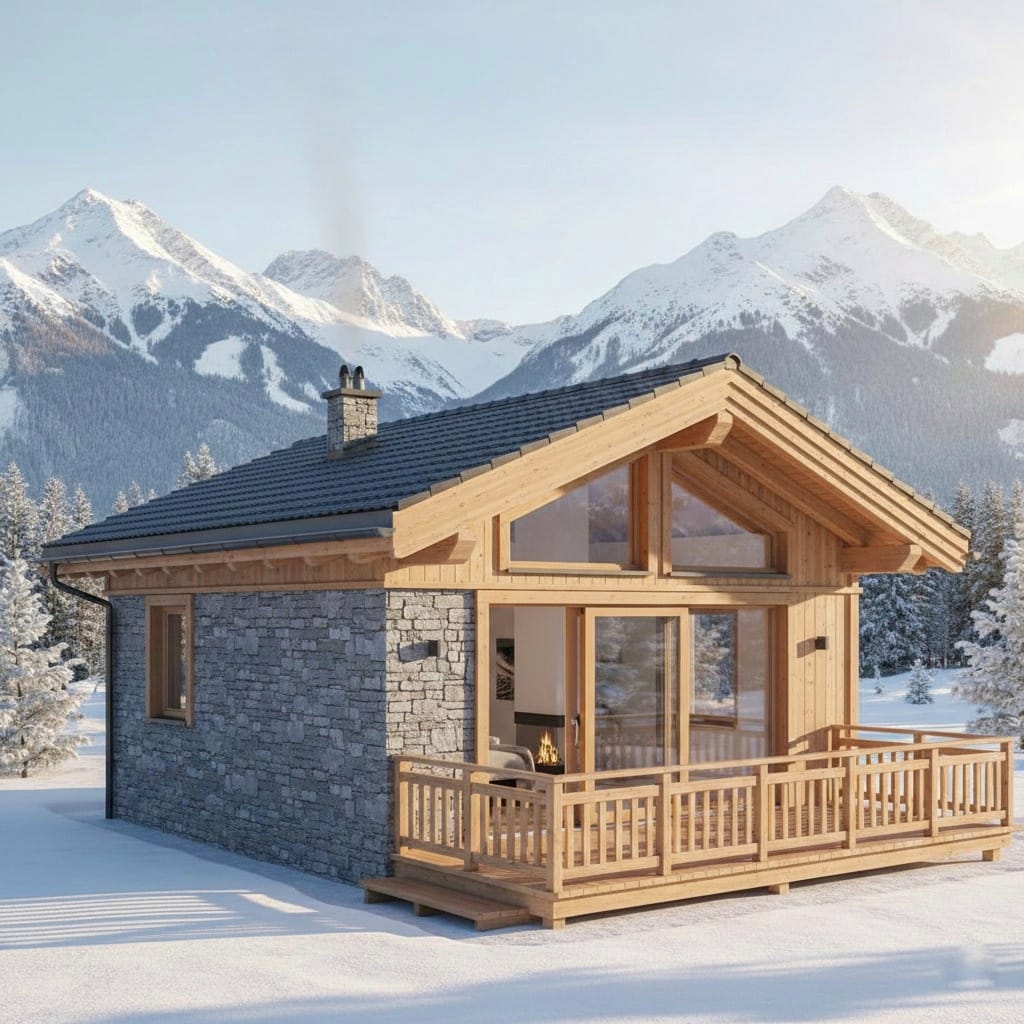
1. Alpine Chalet: The warmth of a mountain retreat
Region: Austria, Switzerland, Bavaria
Mountain style is not just aesthetics; it is the answer to harsh winters. Traditional chalets are recognizable by their massive wooden beams and wide, projecting roofs that protect the balcony and entrance from snow drifts.
- How we replicate: We use a modular system where the lower part of the module is covered with textures that imitate gray mountain stone, while the upper segments are covered with wooden cladding made of larch or thermally treated wood.
- Key detail: Characteristic wooden balconies and large glass openings on the gable to make the most of the sun and the view of the peaks.
- Advantage of the replica: Unlike old wood that "works" and cracks, our modules are perfectly insulated, eliminating the drafts that are common in old mountain houses.
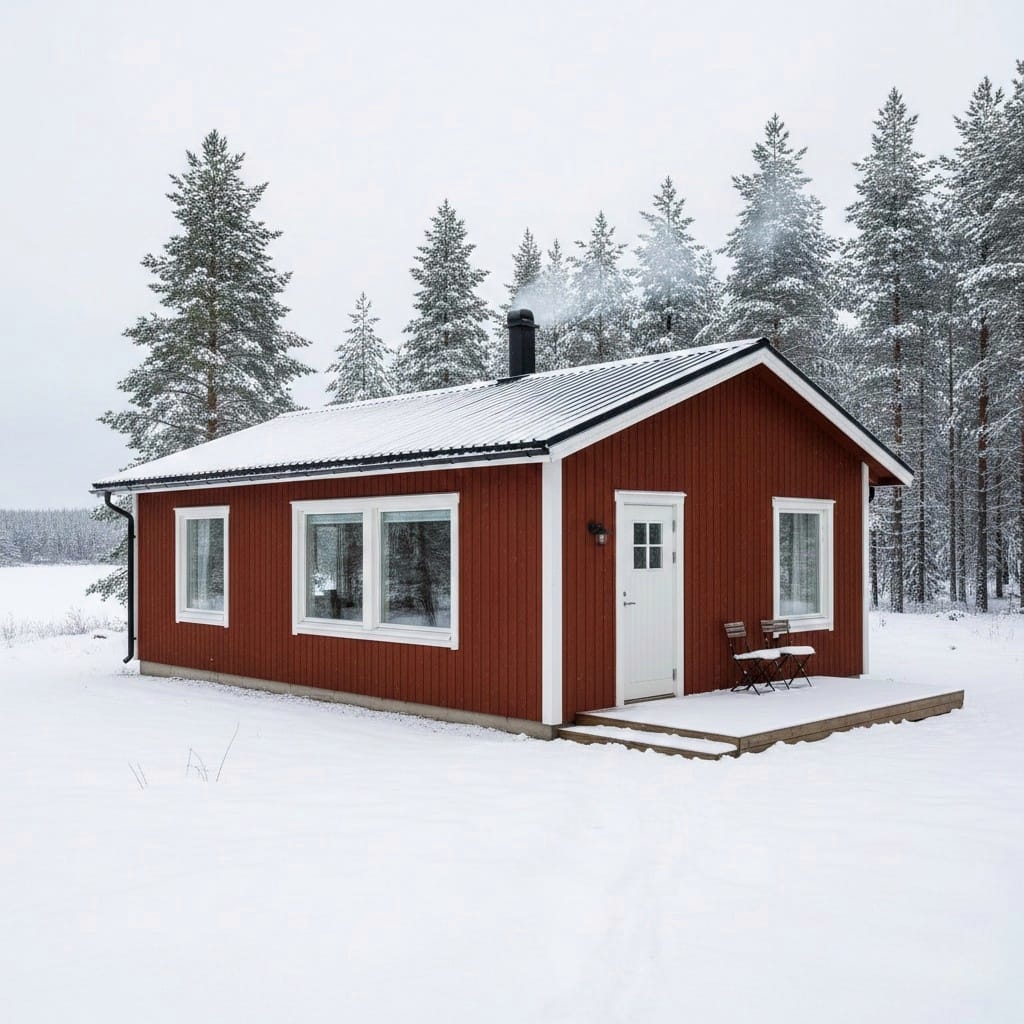
2. Scandinavian Minimalism: Red Houses of the North
Region: Sweden, Norway, Finland
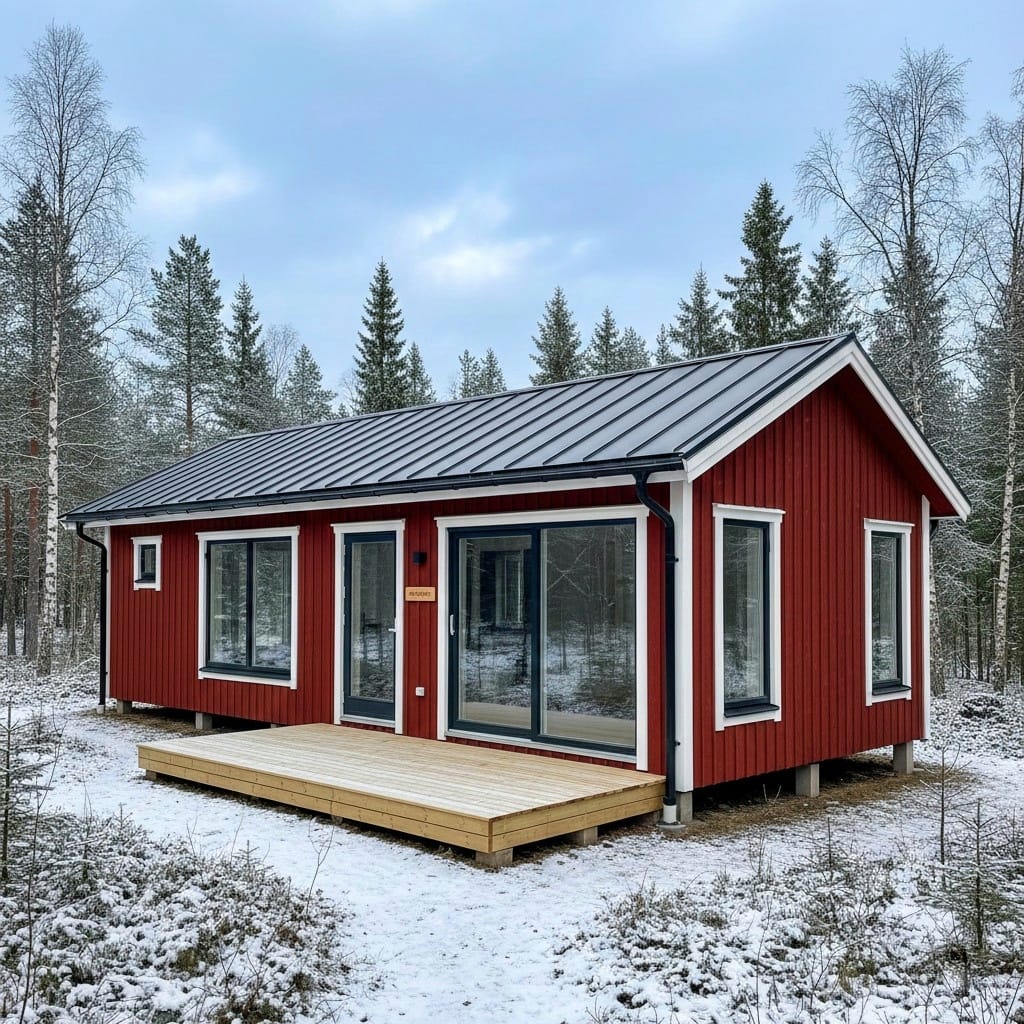
Known as Falu Red Color, these houses are a symbol of Nordic modesty and functionality. Their simple geometry perfectly coincides with modular thinking.
- How we replicate: The basic module of $18 \text{ m}^2$ (or more connected) is clad with vertical wooden slats treated with ecological paints in dark red, anthracite or forest green tones.
- Key detail: Contrasting white frames around windows and doors that give that distinctive "hygge" feeling.
- Advantage of the replica: Scandinavian style requires superior thermal insulation. Our panels exceed passive building standards, ensuring minimal heating costs even in extreme minus temperatures.
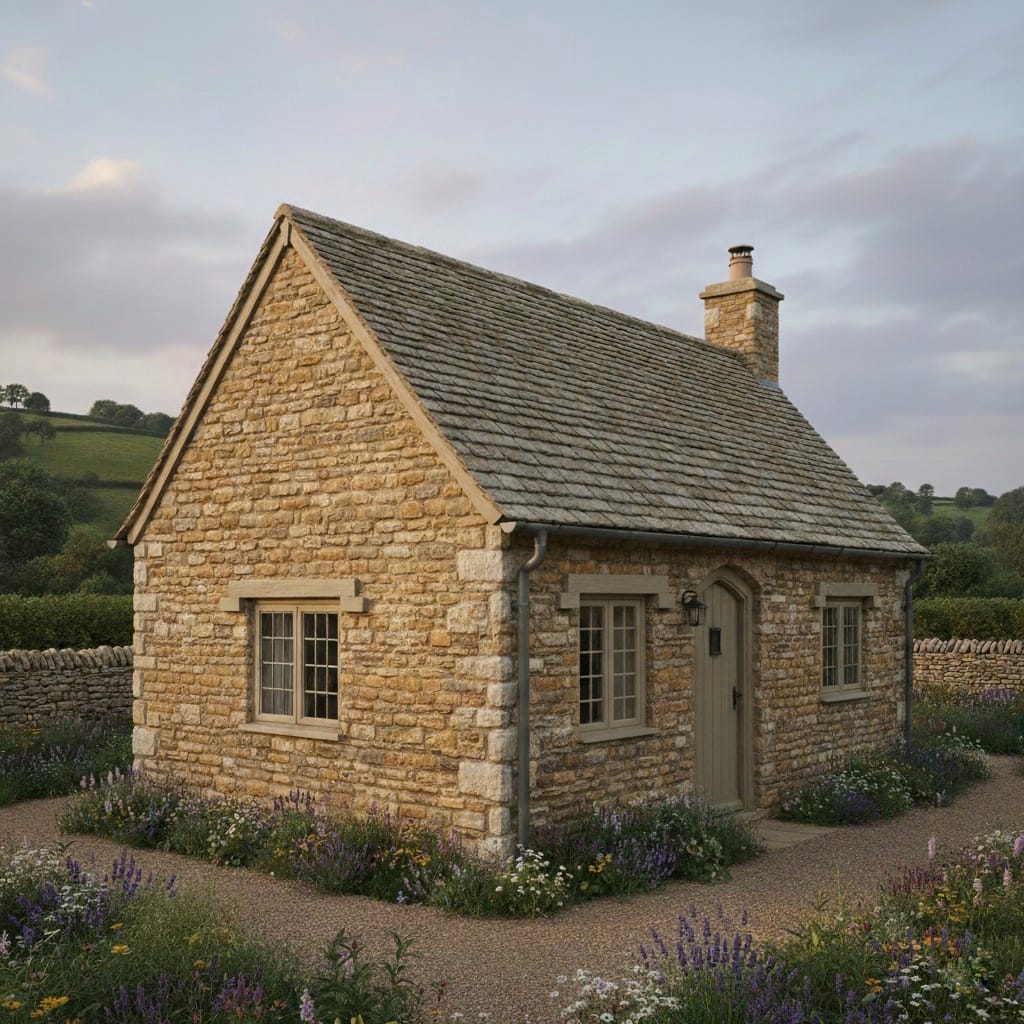
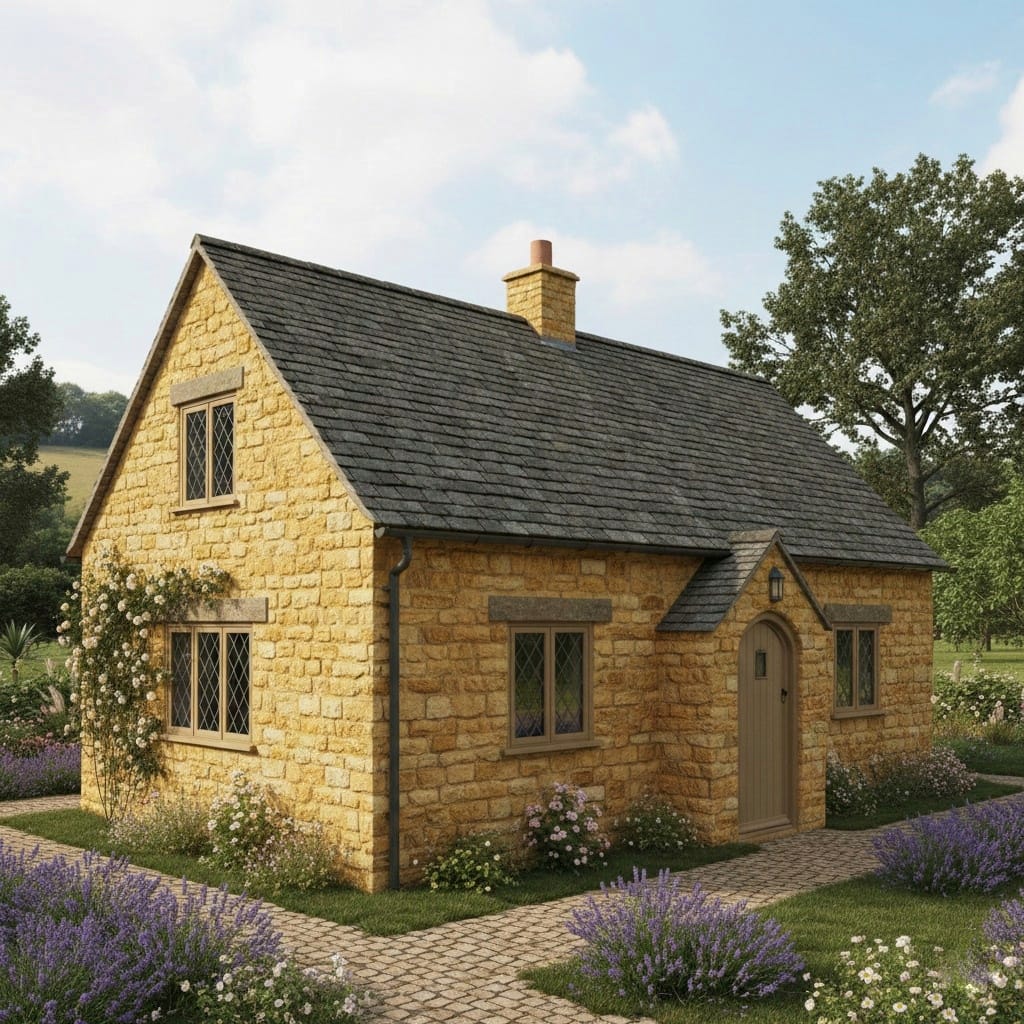
3. Cotswold Cottage: English charm in stone
Region: England (Cotswolds), Normandy
These houses look like they came straight out of a fairy tale. They are characterized by steep roofs, small stone chimneys, and walls made of “honey-yellow” stone.
- How we replicate: Using innovative facade cladding that faithfully imitates the irregular texture of sandstone. The roofs are made with a slope of over $45^\circ$, which is atypical for modern modular buildings, but is the core of this style.
- Key detail: Windows with cross-slats (muntins) that break up the glass surface and give a rustic look.
- Advantage of the replica: Original stone houses suffer from moisture. Our “dry” construction technology ensures that there is no condensation inside the walls, while maintaining an identical visual identity on the outside.
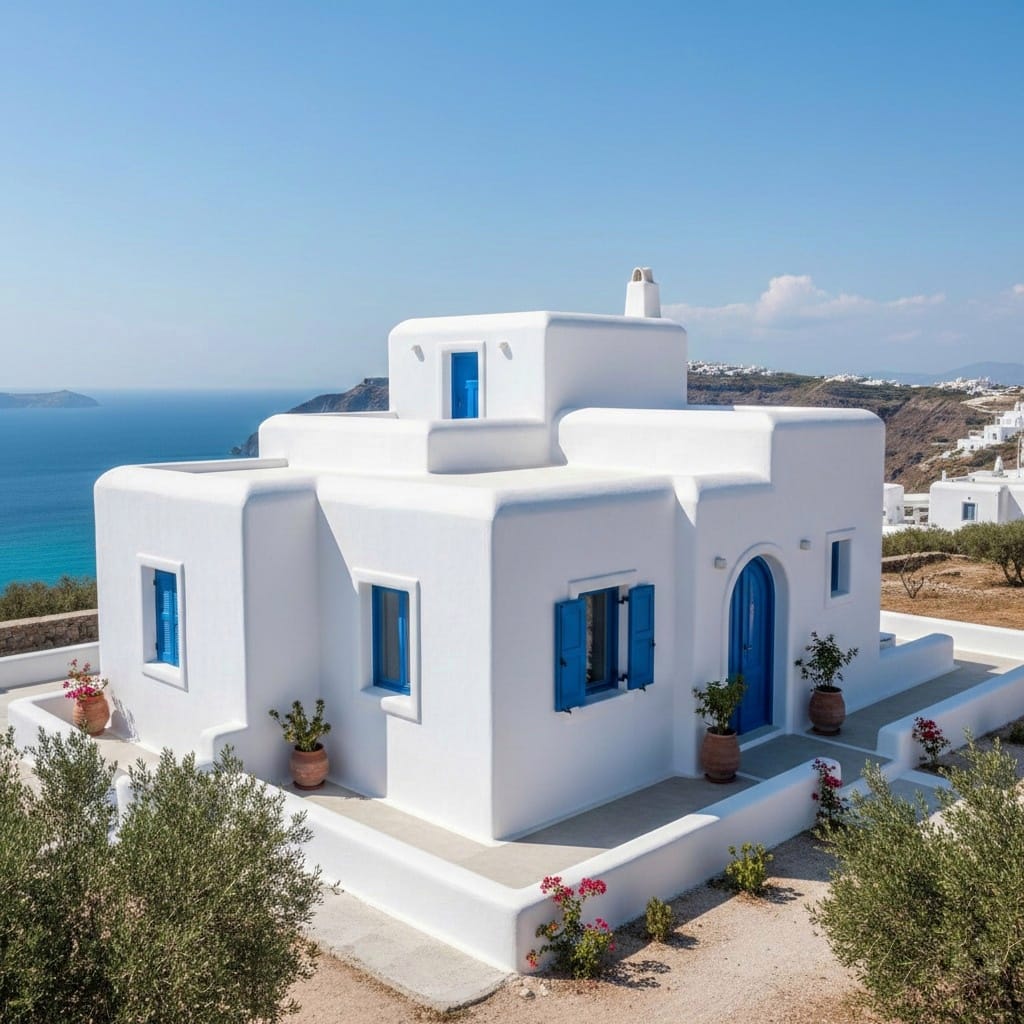
4. Cycladic Cube: White Symphony of the Mediterranean
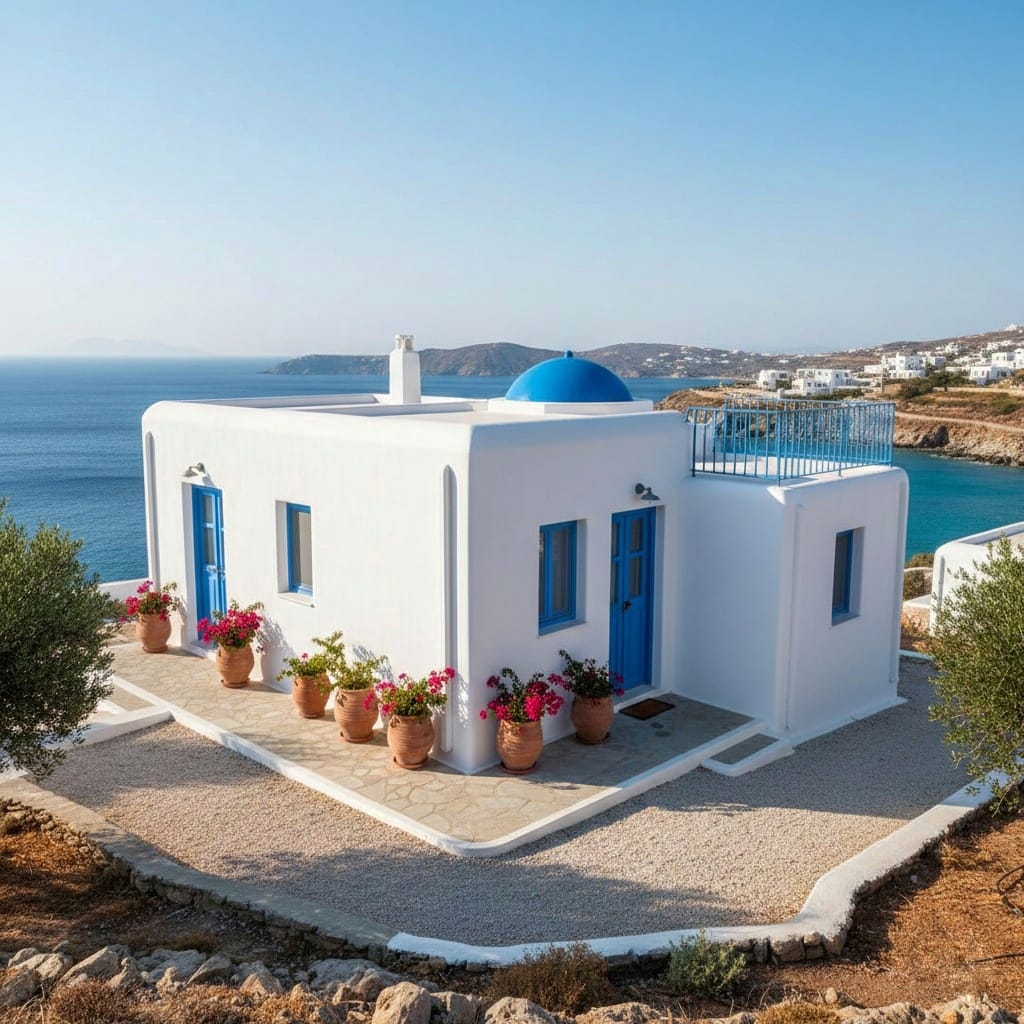
Region: Greek islands (Santorini, Mykonos)
This is the most “modular” of all traditional styles. Cycladic architecture is based on cubes with rounded edges that stack up depending on the configuration of the terrain.
- How we replicate: By connecting multiple modules of different heights to create a playful, stepped form, the facade is pure white, with “soft” rounded corners that imitate hand-applied plaster.
- Key detail: Flat roofs that serve as terraces and intense blue woodwork that creates an iconic contrast.
- Advantage of the replica: Flat roofs are often a critical point for leaks. Our waterproofing system uses state-of-the-art membranes that guarantee complete waterproofing, which was the biggest problem with the original Greek construction.
5. Provencal Farmhouse (Mas)
Region: South of France
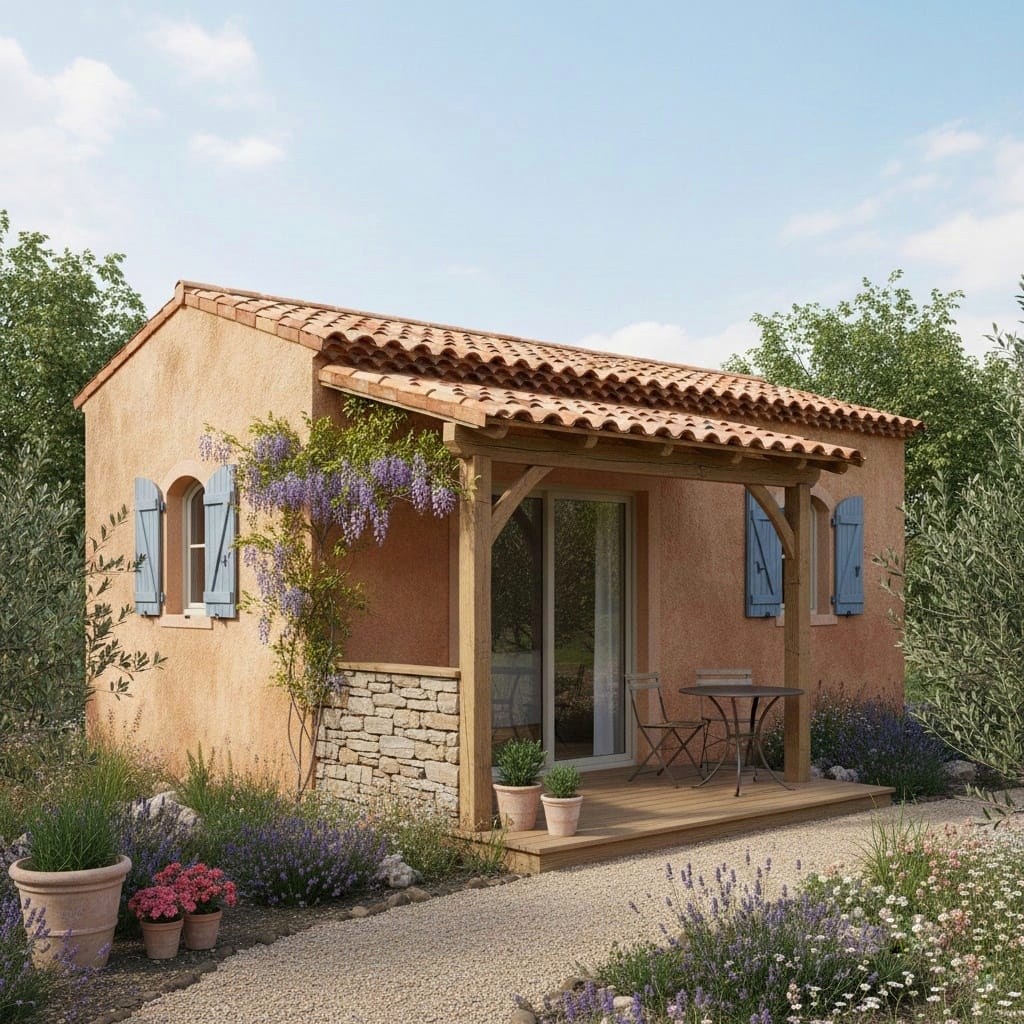
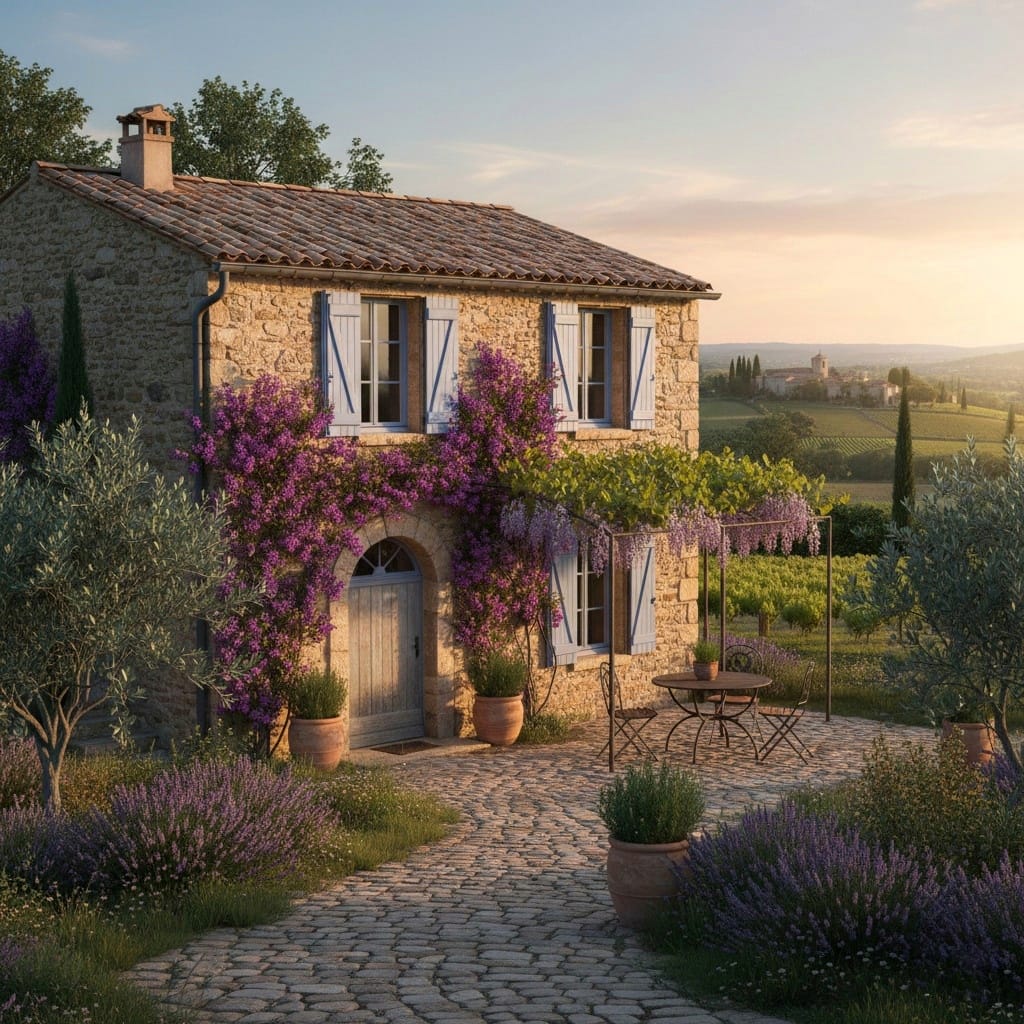
The Provençal house is a symbol of relaxed living. It is characterized by pastel colors (lavender, pale blue), low roofs with gutter tiles and sand-colored walls.
- How we replicate: We use facade systems in warm ochre tones with visible textures. Wooden shutters are mounted directly on the module, giving an authentic look of the Provence region.
- Key detail: Large terraces with pergolas that become an extension of the living room, which is easily done by adding an external modular frame.
- Advantage of the replica: Traditional French stone houses are extremely hot in the summer. Our insulation reflects the heat, keeping the interior comfortable without the constant need for air conditioning.